Class A
5 - 50 tCO₂eq
Most offices, restaurants and shops
- Leak tightness check
- 1x / year
- Leak detection
- -
- Logbook
- Mandatory
Standard split or multisplit with R32/R410A up to approx. 4 kg charge. Annual visual and seal inspection.
Annual leak tests of the refrigerant circuit in accordance with EU Regulation 517/2014. Refrigerant leak = fine up to 1.5 million Kč.
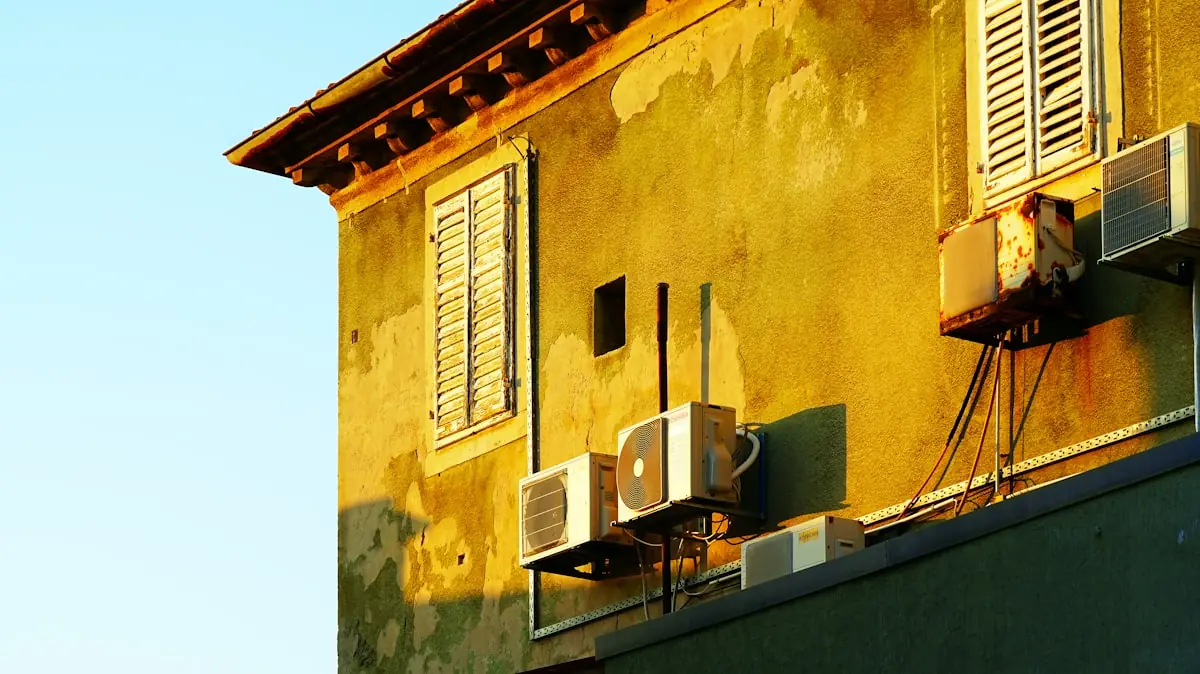
Air conditioning inspection is a systematic check of the technical condition and functionality of the cooling system. It is not an optional service. It is legal obligation for all systems containing F-gases exceeding 5 tonnes of CO₂ equivalent. Includes visual inspection, parameter measurement and maintenance work where necessary.
As part of the inspection, the technician checks five main items:
Locating leaks and refrigerant escapes using an electronic probe or UV dye.
removal of settled dust, disinfection, replacement of worn parts
compressor performance check, expansion valve, suction and discharge
If a leak is detected in the circuit, a technician with F-gas certification will top up R32/R410A from a recycling container.
EU Regulation 517/2014 sets deadlines for leak checks based on the CO₂ equivalent: not according to the mass of refrigerant, but according to GWP × mass.
Most offices, restaurants and shops
Standard split or multisplit with R32/R410A up to approx. 4 kg charge. Annual visual and seal inspection.
VRF systems, hotels, data centres
Larger VRF and refrigeration circuits. Automatic leak detection recommended, reduces inspection interval by half.
Wholesale refrigerants, industry
Industrial cooling circuits and large VRF installations. Fixed leak detection system installation is a legal requirement.
Annual inspection is not just a "quick look". A professional procedure follows four steps in accordance with EN 378 and EU Regulation 517/2014.
Condition of outdoor and indoor units, corrosion, evaporator contamination, condensate drainage, compressor vibration. Circuit pressure measurement.
Leak detection, electronic halogen probe, ultrasound, or UV dye. Inspection of joints, brazed welds and service valves.
Evaporator cleaning with enzyme foam, disinfection, filter replacement. Condensate drain check (regular siphon excavation).
Date, technician's name (with F-gas certification under § 10 of Act 73/2012), circuit status, refrigerant mass. Failure to record may result in a fine up to 1.5 million Kč.
Work with F-gases may only be carried out by a person holding a current certificate in accordance with EU Regulation 2015/2067. There are four categories based on the scope of authority.
All services, installation, maintenance, repair, dismantling, leak testing of all systems and refrigerant recycling. Full authority.
Same as Category I, but only for equipment with a charge < 3 kg (or < 6 kg for hermetically sealed units). Met by simpler training.
Refrigerant recycling only: no work on the circuit. For storage facilities and disposal companies.
Leak tightness check only: no intervention in the circuit. The least stringent type for regular inspections.
Verification tip: Before you hire a company, request its F-gas certification number and verify it in the database. Chamber of Authorised Waste Disposal and Environmental Specialists of the Czech Republic (ČKAOE). Without a valid certificate, the inspection report is not recognised and ČIŽP will impose fines.
Three terms are often confused in practice, yet they have different meanings and frequencies. The distinction is important: a revision cannot be replaced by routine maintenance.
Regular maintenance: filter cleaning, condensate drainage check
Statutory leak check for F-gases and registration entry
Repairs, part replacements, refrigerant top-up after fault.
Practical example: maintenance means you clean the filter yourself. Inspection means a technician arrives to measure pressure and check for leaks. Service means repairing the compressor after a breakdown.
Real prices from certified technicians in 2026. A planned annual contract (inspection + service) is typically 20% cheaper than ad-hoc call-outs.
inspection and cleaning of the evaporator
office, flat, small business premises
per compressor + circuit length
split, maintenance plan 1×/year
Prices are exclusive of VAT · delivery is charged per region · the final offer is confirmed by a specific certified technician.

PThe air-conditioning installer is legally liable for maintaining the logbook and conducting periodic leak tightness checks. A large office in Prague often has 20+ indoor units, a hotel with a wellness centre 50+, and a datacentre tens of tonnes of refrigerant.
We offer a framework annual contract. One visit for all units, electronic maintenance logbook, automatic reminder before the deadline expires, and dispatch within 24 hours in case of a leak. For comprehensive coverage of mandatory inspections in the building, we also arrange... chimney inspections, revize EZS and fire extinguisher inspections.
Tonne CO₂ equivalent: measure of the refrigerant's global warming potential. Formula: charge mass (kg) × GWP of refrigerant ÷ 1000. Example: R410A has a GWP of 2,088; a split unit with 1.5 kg = 1.5 × 2,088 = 3.1 tCO₂eq → falls under 5 tCO₂eq, no inspection required. R32 (GWP 675) is already lower, hence the new standard.
Only technicians with a current F-gas certification under EU Regulation 2015/2067 and Act No. 73/2012 Coll. In its valid scope (categories I-IV depending on the task). Without certification, the document is not recognised and the control authority will impose fines.
ČIŽP may impose a fine of up to 200,000 Kč on individuals and up to 1,500,000 Kč on legal entities. This is in addition to liability for damage caused by refrigerant leaks in the event of fire or accident.
Standard split (1 indoor + 1 outdoor unit) 1 500-2 800 Kč. Multisplit (2-4 indoor units) 2 500-4 500 Kč. VRF and large systems are calculated per compressor plus circuit length, typically 8 000-25 000 Kč. An annual contract with scheduled maintenance is usually cheaper.
Old refrigerant must be recovered by a certified technician into a recycling container (R22 refilling has been banned since 2015). It cannot simply be vented. Proof of recycling is archived for a minimum of 5 years. If a company does not do this, it is a criminal offence.
Fill in the form and within 24 hours we will send you quotes from 2-3 verified technicians from your region. Free of charge, no obligation.